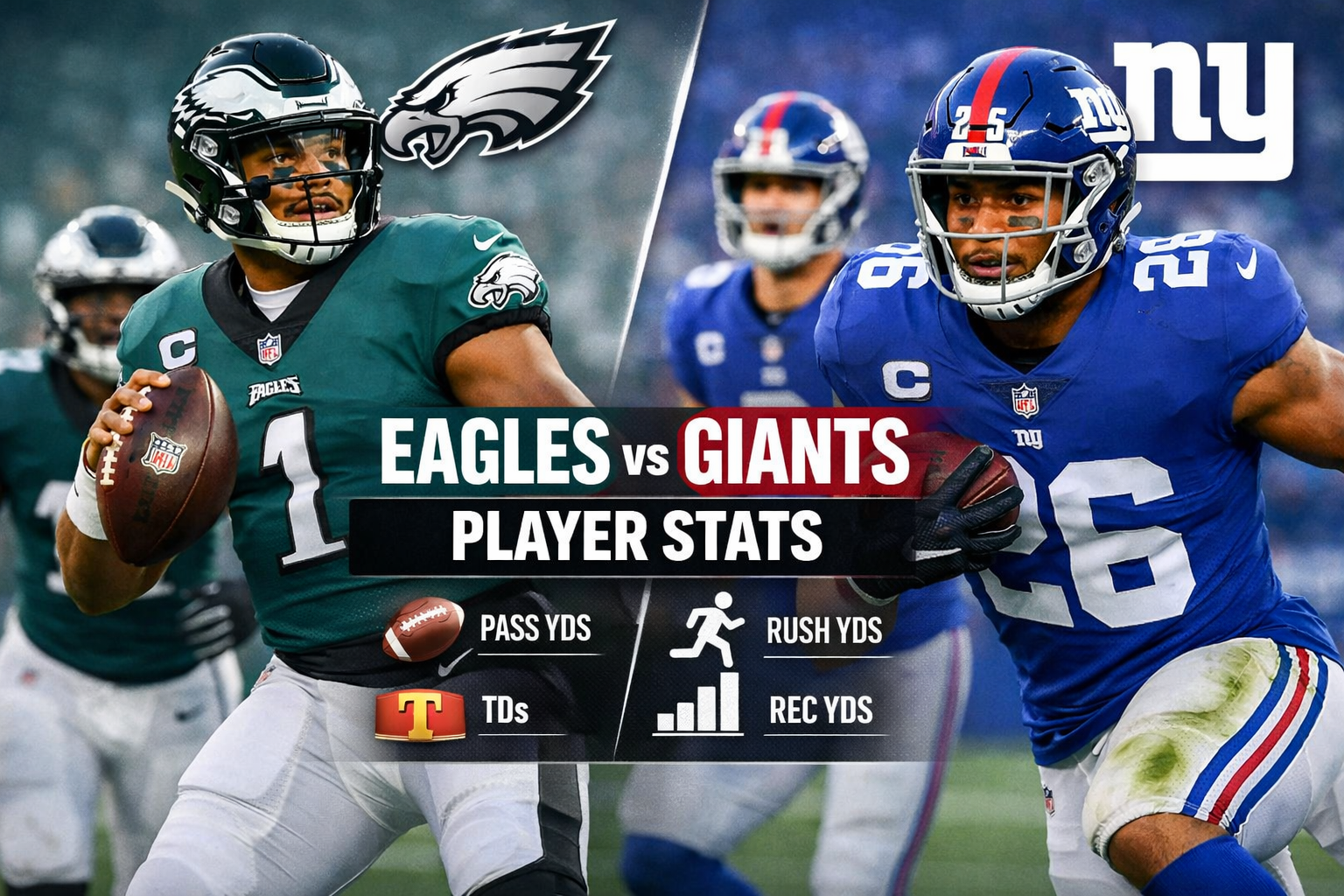
The rivalry between the philadelphia eagles vs new york giants match player stats is one of the most intense and history-rich matchups in the NFL. Every time these two NFC East teams collide, the spotlight naturally falls on player stats. Fans don’t just want to know who won—they want to know who dominated, who struggled, and which performances shifted the momentum. That’s exactly where Philadelphia Eagles vs New York Giants match player stats become essential.
This matchup is often defined by physical play, emotional swings, and individual battles across the field. Quarterbacks are judged drive by drive, running backs are measured by efficiency rather than raw totals, and defensive players earn praise for disruption more than flashy numbers. Stats in this rivalry tell stories that the final score alone never can.
In this article, we’ll break down player stats from an expert perspective, focusing on offense, defense, and the subtle individual contributions that usually decide Eagles vs Giants games. Rather than listing numbers without context, we’ll explain what those stats actually mean on the field.
Quarterback and Offensive Skill Player Stats Breakdown
When analyzing Philadelphia Eagles vs New York Giants match player stats, quarterback performance always sits front and center. Eagles quarterbacks typically thrive on efficiency, mixing short, high-percentage throws with timely deep shots. Completion percentage, yards per attempt, and third-down conversions often matter more than raw passing yards in this matchup.
On the Giants’ side, quarterback stats usually reflect pressure management. The Eagles’ defensive front forces quick decisions, so stats like time to throw, sacks taken, and interceptions become telling indicators. Even if passing yardage looks respectable, turnovers or stalled drives can reveal a much different story beneath the surface.
Skill position players also play a massive role in shaping offensive stats. Eagles wide receivers tend to spread the ball around, which often results in multiple players posting solid—but not eye-popping—stat lines. Meanwhile, Giants receivers are frequently tasked with making contested catches, meaning yards after catch and target efficiency become key stats to watch.
Running back numbers deserve equal attention. In Eagles vs Giants games, rushing stats often determine tempo. The Eagles typically emphasize balanced rushing attempts, using multiple backs or quarterback runs to keep defenses honest. The Giants, on the other hand, rely heavily on individual rushing efficiency, making yards per carry a far more meaningful stat than total attempts.
Defensive Player Stats That Shape the Outcome
re this rivalry truly comes alive. In most Philadelphia Eagles vs New York Giants match player stats reports, sack totals and quarterback pressures tell the clearest story. The Eagles’ defensive line often dominates stat sheets, with multiple players recording pressures rather than one standout racking up all the sacks.
Giants defensive stats, by contrast, tend to highlight tackling volume and coverage discipline. Linebackers and safeties frequently lead the team in tackles, reflecting longer drives and more defensive snaps. While that may not always be ideal, it shows resilience and an ability to limit explosive plays.
Turnover stats are another crucial factor. Interceptions, forced fumbles, and fumble recoveries often swing these games dramatically. The Eagles usually focus on ball disruption, so defensive backs and edge rushers often appear in turnover-related stats. The Giants, meanwhile, rely more on reading the quarterback and capitalizing on mistakes rather than forcing them outright.
Red-zone defensive stats also deserve attention. Holding an opponent to field goals instead of touchdowns doesn’t always stand out in box scores, but it heavily impacts win probability. In this rivalry, defenses that perform well inside the 20-yard line often give their offense the breathing room needed to control the game.
Offensive Line and Trenches: The Hidden Stat Battle
One of the most overlooked areas in Philadelphia Eagles vs New York Giants match player stats is offensive line performance. While linemen don’t post traditional fantasy numbers, their influence shows up everywhere—from rushing averages to sack totals allowed. Eagles offensive linemen usually grade well in pass protection, which directly boosts quarterback efficiency stats.
For the Giants, offensive line stats are often more inconsistent, making pressures allowed and run-block win rates especially important. When the Giants’ line performs above average, their entire offense looks different on paper. Suddenly, passing yards climb, rushing efficiency improves, and time of possession tilts in their favor.
On the defensive side of the trenches, interior linemen stats matter just as much as edge rushers. Tackles for loss, run stops, and double-team rates often explain why certain drives stall. Eagles interior defenders frequently disrupt plays before they develop, which doesn’t always show up in sack stats but dramatically affects offensive rhythm.
Ultimately, trench stats explain why certain skill players shine or struggle. A wide receiver’s quiet game may have nothing to do with coverage and everything to do with protection breaking down. Understanding these connections elevates how we interpret match player stats in this rivalry.
Key Individual Performances That Shift Momentum
Every Eagles vs Giants game seems to feature at least one unexpected individual performance that changes the tone. These aren’t always superstar outings—sometimes it’s a role player whose stats quietly reshape the game. A slot receiver converting multiple third downs or a backup linebacker recording key stops can completely alter momentum.
Special teams players also sneak into the stat conversation more often than fans realize. Punt return averages, kickoff field position, and field goal accuracy frequently influence these tightly contested matchups. While these stats may seem secondary, they often decide short-field opportunities that swing scoring margins.
Another important angle is snap count and usage stats. Players who stay on the field longer usually have a bigger cumulative impact, even if their box score numbers look modest. Eagles defenders often rotate heavily, while Giants defenders tend to log higher snap counts, which becomes noticeable late in games.
When reviewing Philadelphia Eagles vs New York Giants match player stats, context is everything. A stat line only tells part of the story unless you understand when and how those numbers were accumulated. Clutch plays in the fourth quarter often matter far more than early-game production.
Final Thoughts on Philadelphia Eagles vs New York Giants Match Player Stats
At the end of the day, Philadelphia Eagles vs New York Giants match player stats offer far more than surface-level insight. They reveal strategy, execution, and the hidden battles that decide outcomes long before the final whistle. This rivalry thrives on details, and the stats reflect that complexity.
Rather than focusing solely on highlight numbers, smart fans and analysts look deeper—at efficiency, situational success, and defensive disruption. That’s where the true story of each matchup lives. Stats don’t just show who played well; they explain why a team succeeded or failed.
As this rivalry continues to evolve, player stats will remain the most reliable lens for understanding each chapter. Whether you’re breaking down the game as a fan, analyst, or fantasy football enthusiast, diving into these numbers will always give you a sharper, more informed perspective.
You May Also Read