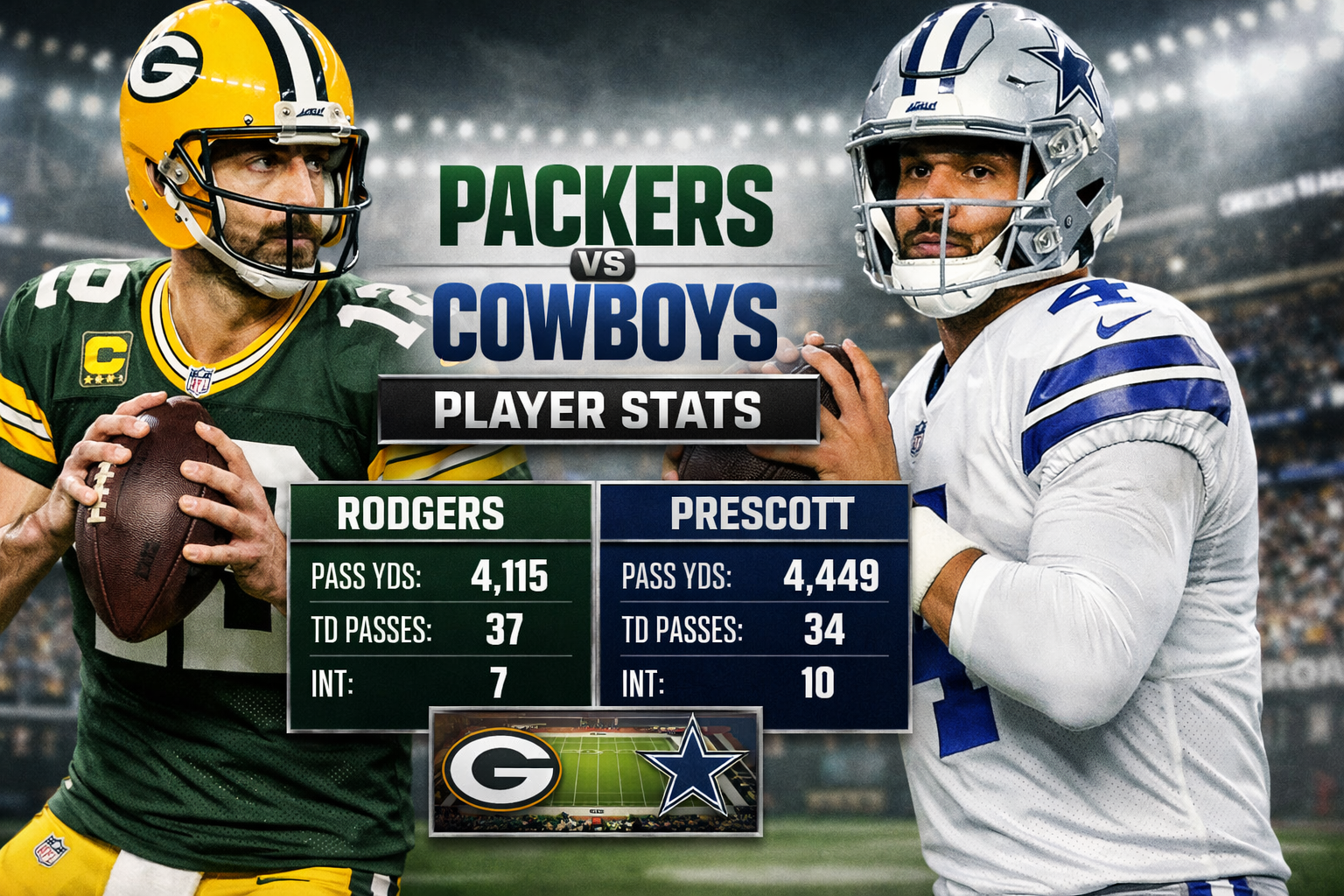
When the green bay packers vs dallas cowboys match player stats share the field, it never feels like just another NFL game. This matchup carries history, playoff drama, and some of the league’s most recognizable stars. Looking closely at the Green Bay Packers vs Dallas Cowboys match player stats gives us a clearer picture of how individual performances shape the outcome and why this rivalry continues to deliver memorable moments.
Rather than focusing on one highlight play, this breakdown looks deeper into quarterback efficiency, offensive balance, defensive impact, and the subtle stat lines that often decide the final score. Player stats tell stories that fans don’t always catch in real time, especially when two high-profile teams collide.
Let’s dive into how the key players on both sides stack up and what the numbers really say about this classic NFC showdown.
Quarterback Performance and Passing Efficiency
Quarterback play is always the headline when analyzing Green Bay Packers vs Dallas Cowboys match player stats. Both franchises have long histories of elite quarterback talent, and recent matchups continue that tradition with strong arm play and sharp decision-making.
For Green Bay, the quarterback’s stat line often reflects balance and patience. Completion percentage tends to be solid, with fewer forced throws and a willingness to take what the defense gives. Even when explosive plays are limited, Packers quarterbacks usually maintain efficiency through smart reads and controlled passing volume. These numbers may not always jump off the page, but they consistently keep drives alive.
Dallas quarterbacks, on the other hand, typically post more aggressive passing stats in this matchup. Higher passing attempts, strong yardage totals, and red-zone efficiency are common trends. The Cowboys often rely on tempo and early down throws, which leads to bigger raw numbers but also increases pressure to avoid turnovers. Interception rate and sack avoidance become critical stats here.
When comparing the two, the contrast is clear: Green Bay leans toward controlled efficiency, while Dallas favors production and pace. The final outcome usually depends on which quarterback better protects the ball while still capitalizing on scoring opportunities.
Running Game Contributions and Rushing Metrics
The running game plays a quietly powerful role in Green Bay Packers vs Dallas Cowboys match player stats, even in games dominated by passing headlines. Rushing efficiency often determines time of possession and keeps elite pass rushers in check.
Green Bay’s rushing stats typically highlight consistency rather than volume. The Packers often spread carries among backs, resulting in respectable yards per attempt and steady second-down situations. Even when total rushing yards aren’t massive, the success rate on early downs helps the offense stay unpredictable and balanced.
Dallas usually brings more physicality in the run game. Cowboys running backs often log higher carry totals, pushing defensive fronts and wearing them down over four quarters. Their rushing stats frequently include chunk gains, especially behind a strong offensive line. Goal-line efficiency is another key area where Dallas running backs tend to shine.
When breaking down the numbers, the difference comes down to philosophy. Green Bay uses the run to complement the pass, while Dallas often uses it to control the game’s rhythm. Whichever team executes their rushing plan more effectively usually gains a significant edge.
Wide Receivers, Tight Ends, and Receiving Stats
Receiving stats are where Green Bay Packers vs Dallas Cowboys match player stats truly come alive. Both teams feature versatile pass catchers capable of changing the game with one play.
Packers receivers often show balanced stat lines across multiple targets. Instead of one player dominating the box score, Green Bay spreads receptions, yards, and first downs among wideouts and tight ends. This makes defensive planning more difficult and reduces reliance on any single matchup advantage.
Dallas receivers typically post flashier numbers. One or two players often lead in targets and receiving yards, creating clear focal points in the offense. These stat lines reflect confidence in elite route runners and contested-catch specialists. Yards after catch is another area where Cowboys receivers frequently stand out.
Tight ends on both sides also play a critical role, especially on third down. Their reception totals may not be massive, but their impact shows up in conversion rates and red-zone efficiency. These hidden stats often decide close games.
Defensive Standouts and Impact Stats
Defense doesn’t always get the spotlight, but it heavily influences Green Bay Packers vs Dallas Cowboys match player stats. Pressure, turnovers, and tackling efficiency can swing momentum quickly.
Green Bay’s defensive stats often emphasize discipline. Tackle counts are spread evenly, missed tackles are kept low, and coverage metrics reflect solid zone execution. Sack numbers may vary, but quarterback pressures tend to disrupt timing even when sacks don’t show up on the stat sheet.
Dallas defenses typically generate more eye-catching numbers. Higher sack totals, forced fumbles, and pass breakups are common in this matchup. The Cowboys defense thrives on aggression, which can lead to game-changing plays but also occasional coverage breakdowns.
Turnover margin becomes the key comparison here. When Dallas converts pressure into takeaways, their defense dominates. When Green Bay avoids mistakes and stays efficient, the defensive stats tilt in their favor.
Special Teams and Field Position Metrics
Special teams stats are often overlooked, yet they play a major role in Green Bay Packers vs Dallas Cowboys match player stats. Field position can quietly dictate offensive strategy throughout the game.
Green Bay usually excels in kick coverage and punt placement. Average starting field position often favors the Packers, allowing their offense to operate with shorter fields and less risk. These subtle advantages don’t show up in highlight reels but matter over four quarters.
Dallas special teams units tend to focus on explosiveness. Return yardage is often higher, creating instant momentum swings. While this approach carries some risk, it also creates scoring opportunities that can change the game quickly.
When analyzing special teams numbers, consistency versus upside becomes the theme. Teams that minimize mistakes usually gain the upper hand late in tight contests.
Final Thoughts on Match Player Stats
Looking at the full picture, Green Bay Packers vs Dallas Cowboys match player stats tell a story of contrasting styles and execution. Green Bay thrives on efficiency, balance, and discipline, while Dallas leans into power, pace, and explosive potential.
Neither approach is inherently better. The deciding factor is often which team imposes its identity more effectively on game day. Stats reveal not just who played well, but how they played and why certain strategies succeeded.
For fans and analysts alike, this matchup remains one of the most fascinating in the NFL. And as long as both franchises continue producing elite talent, the player stats from Packers vs Cowboys games will always be worth a deep dive.
You May Also Read
Philadelphia Eagles vs New York Giants Match Player Stats