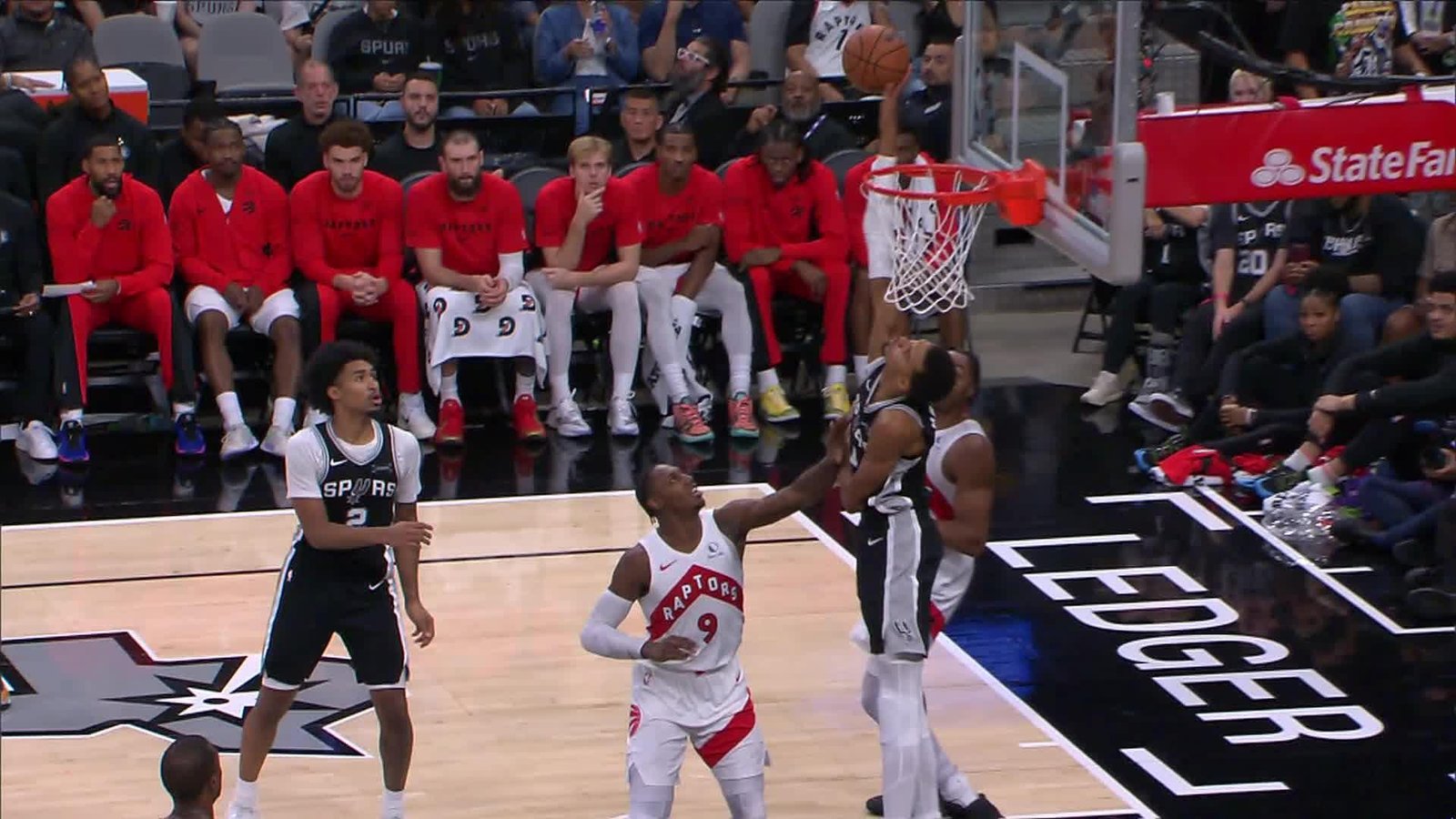
The clash between the Toronto Raptors and the San Antonio Spurs is always more than just another regular-season NBA game. It is a meeting of two franchises known for strong organizational identity, player development, and adaptability. When these teams share the court, the matchup becomes a fascinating study in contrast: Toronto’s emphasis on defensive versatility and athletic wings versus San Antonio’s structured offense, ball movement, and youthful promise.
This blog offers a comprehensive and detailed breakdown of the Toronto Raptors vs San Antonio Spurs match player stats, going beyond surface-level numbers. It explores how individual performances influenced the game, how team strategies showed up statistically, and what the numbers reveal about the present and future of both teams.
Game Overview and Match Flow
From the opening minutes, the game established a competitive rhythm. Toronto aimed to control pace through defensive pressure and transition opportunities, while San Antonio focused on execution in the half court, using spacing and passing to create high-quality shots.
The first half featured balanced scoring, with both teams trading runs. Toronto leaned into aggressive defense, forcing turnovers and generating fast-break points. San Antonio countered with patient ball movement and effective interior scoring. By halftime, the stats reflected a tightly contested matchup with neither team able to fully impose its will.
The second half became a chess match. Adjustments on both sides shifted the statistical balance, making individual performances even more crucial in determining the outcome.
Toronto Raptors Player Stats and Performance Breakdown
Scottie Barnes as the Offensive Engine
Scottie Barnes once again demonstrated why he is central to Toronto’s system. His stat line reflected versatility rather than pure scoring volume. Barnes contributed across points, rebounds, and assists, often initiating offense and creating mismatches with his size and athleticism.
Barnes’ scoring came from strong drives, mid-range pull-ups, and opportunistic finishes in transition. His assist numbers highlighted his improving court vision, particularly when drawing multiple defenders. On defense, Barnes’ steals and deflections disrupted San Antonio’s rhythm and led directly to scoring opportunities.
Pascal Siakam’s Two-Way Influence
Pascal Siakam’s player stats showcased his role as a stabilizer and closer. His scoring efficiency improved as the game progressed, particularly in isolation situations and post-ups against smaller defenders.
Siakam also contributed significantly on the glass, especially on defensive rebounds that limited second-chance points. His ability to guard multiple positions allowed Toronto to switch defensively without losing structure, a factor that does not always show fully in basic stats but influences overall team performance.
Raptors Backcourt Contributions
Toronto’s guards focused on tempo control and defensive pressure. While their scoring totals may not have been eye-catching, their assist-to-turnover ratios were critical. Ball security allowed Toronto to maintain offensive flow and limit San Antonio’s transition chances.
Defensively, the Raptors’ guards applied pressure at the point of attack, contributing steals and forcing contested shots late in the shot clock. These efforts were reflected in defensive rating and opponent shooting percentages.
Raptors Bench Player Stats
Toronto’s bench brought energy and physicality. Bench players contributed timely scoring, hustle rebounds, and defensive intensity. While bench scoring totals varied, the impact was felt in maintaining momentum when starters rested.
Plus-minus stats for the bench units highlighted their role in sustaining leads and preventing scoring runs by the Spurs. Florida Gators Football vs Texas Longhorns Football Match Player Stats
San Antonio Spurs Player Stats and Performance Breakdown

Victor Wembanyama’s Statistical Presence
Victor Wembanyama’s stat line immediately stood out. His impact was felt on both ends of the floor, with points, rebounds, and blocks shaping the game’s interior battle.
Offensively, Wembanyama scored through a mix of post touches, pick-and-roll finishes, and face-up jumpers. His length forced Toronto to adjust defensive schemes, often sending help defenders that opened passing lanes for teammates.
Defensively, his blocks and altered shots changed Toronto’s shot selection near the rim. Even when not recording a block, his presence affected drives and forced kick-outs.
Devin Vassell’s Scoring Role
Devin Vassell played a key role as a perimeter scorer. His stats reflected efficient shooting, particularly from mid-range and beyond the arc. Vassell’s off-ball movement created space, and his ability to score within the flow of the offense prevented defensive over-commitment on Wembanyama.
His defensive contributions included contests and positional discipline, limiting open looks for Toronto’s shooters.
Spurs Guard Play and Playmaking
San Antonio’s guards focused on ball movement and shot creation. Assist numbers reflected the team’s emphasis on sharing the ball and finding the best option rather than forcing individual plays.
Turnover stats were relatively controlled, especially against Toronto’s aggressive defense. This discipline kept the Spurs competitive and prevented momentum swings.
Spurs Bench Production
The Spurs’ bench provided youthful energy and defensive effort. While scoring output varied, bench players contributed through rebounds, steals, and pace. Their ability to maintain defensive intensity was crucial during stretches when starters rested.
Bench stats highlighted development potential, showing flashes of chemistry and execution.
Team Stats Comparison and Interpretation
Team stats offer a broader view of how the game unfolded. Toronto’s advantage in turnovers forced and fast-break points reflected their defensive philosophy. San Antonio’s edge in points in the paint demonstrated effective interior play.
Rebounding was a key battleground. Toronto’s collective effort helped neutralize San Antonio’s size advantage, while the Spurs’ offensive rebounds created second-chance opportunities that kept them in the game.
Three-point efficiency favored the team that executed better ball movement during key stretches, emphasizing the importance of shot selection over volume.
Key Statistical Runs That Defined the Game
A pivotal moment came during a third-quarter run when Toronto increased defensive pressure, leading to consecutive turnovers and transition scores. This shift showed up clearly in steal and fast-break stats.
San Antonio responded with a stretch of efficient half-court offense, highlighted by assists and high-percentage shots, narrowing the gap and forcing Toronto to adjust.
Late-game stats reflected composure and execution, with free-throw efficiency and defensive stops playing a decisive role.
Tactical Adjustments and Their Statistical Impact
Toronto adjusted by switching more aggressively on defense, reducing San Antonio’s open perimeter looks. This adjustment showed up in decreased three-point attempts and lower shooting percentages.
San Antonio countered by involving Wembanyama in high-post actions, increasing his touches and assist opportunities. This shift improved offensive efficiency and balanced scoring distribution.
These adjustments demonstrate how coaching decisions translate directly into measurable statistical changes.
Player Efficiency and Advanced Performance Insights
Efficiency metrics highlighted the value of shot selection and decision-making. Toronto’s top performers showed strong true shooting percentages during winning stretches, while San Antonio’s efficiency spiked when the ball moved freely.
Plus-minus stats revealed which lineups were most effective, particularly those combining defensive versatility with spacing.
Advanced defensive metrics underscored the importance of rim protection and perimeter containment in shaping offensive outcomes.
What This Match Reveals About Both Teams
For Toronto, the stats reinforced the importance of defensive intensity, versatility, and unselfish play. The Raptors thrive when multiple players contribute across categories rather than relying on a single scorer.
For San Antonio, the numbers highlighted growth, potential, and the central role of their young core. The Spurs’ ability to compete through execution and teamwork bodes well for their development trajectory.
This matchup served as a measuring stick, offering insights that extend beyond the final score.
Frequently Asked Questions
1. Who was the standout player in the Raptors vs Spurs match?
Standout performances came from key players on both teams who influenced scoring, defense, and momentum.
2. How did Victor Wembanyama perform statistically?
Wembanyama contributed across points, rebounds, and blocks, impacting both ends of the floor.
3. Which team had better defensive stats?
Toronto’s defensive pressure led to more forced turnovers and transition opportunities.
4. Did Toronto control the pace of the game?
Toronto influenced tempo through defense and fast-break execution.
5. How important was bench scoring in this match?
Bench contributions were key in maintaining momentum and preventing scoring droughts.
6. Which team shot more efficiently from three-point range?
Efficiency varied by quarter, reflecting adjustments and shot quality rather than volume alone.
7. How did rebounding affect the outcome?
Rebounding battles influenced second-chance points and overall possession control.
8. Were turnovers a deciding factor?
Turnovers played a significant role, particularly during momentum-shifting runs.
9. What did the stats show about team chemistry?
Assist numbers and ball movement reflected strong team-oriented play on both sides.
10. What can fans learn from this matchup?
The stats reveal growth, strategy, and the importance of execution in modern basketball.
Conclusion
The Toronto Raptors vs San Antonio Spurs match player stats provide a detailed snapshot of a game shaped by effort, adaptability, and emerging talent. Toronto’s defensive versatility and balanced contributions showcased their identity, while San Antonio’s structured offense and youthful core highlighted a team building toward the future.
Beyond individual numbers, this matchup illustrated how basketball success is built on collective execution, smart adjustments, and understanding roles. Player stats, when viewed in context, tell a story of momentum shifts, strategic decisions, and evolving team identities. For fans and analysts alike, games like this offer valuable insight into where both franchises stand and where they are headed next. techtimebsiness.co.uk